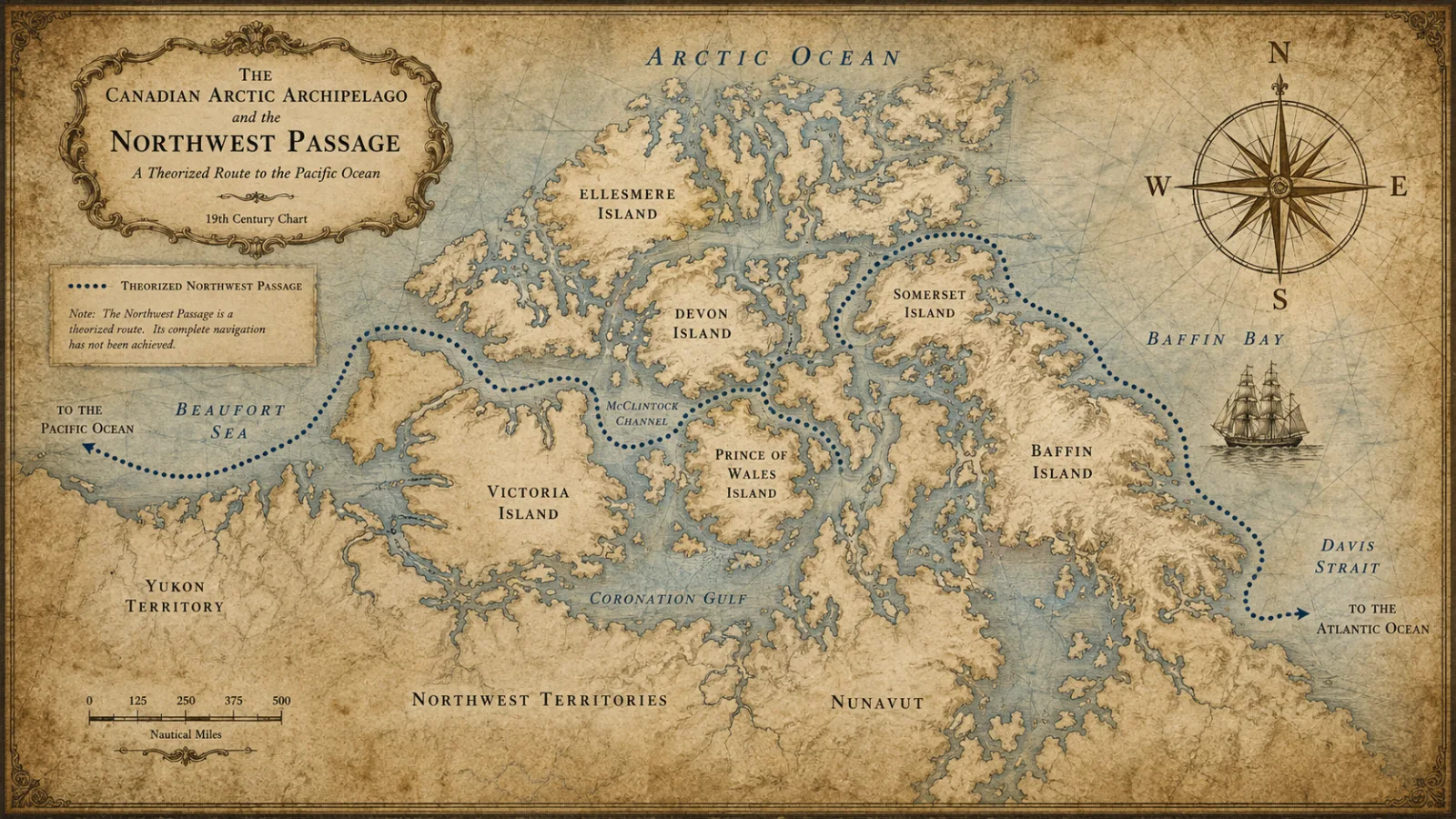
In the summer of 1845, two ships sailed out of the Thames bound for the top of the world. They carried 129 men, tons of preserved food, a library of over a thousand books, and the confidence of the most powerful navy on Earth. Their goal was the Northwest Passage, the sea route through the Canadian Arctic that had lured explorers for three centuries.
Not one of them came home.
What happened to Sir John Franklin's expedition became one of the nineteenth century's deepest mysteries. For over 160 years, searchers found only scattered bones, a handful of cairns, and a single written record. Only in the last decade have the ships themselves been found, resting on the seafloor, silent and largely intact. Even now, the full story of how a state-of-the-art expedition ended in mass death remains only partly answered.
Britain's Quest for the Northwest Passage
By the 1840s, Britain had spent generations searching for a sea route through the Arctic. Mapping the region had become a matter of national prestige and scientific ambition. After the Napoleonic Wars, the Royal Navy had ships, funding, and a surplus of experienced officers eager for a mission.
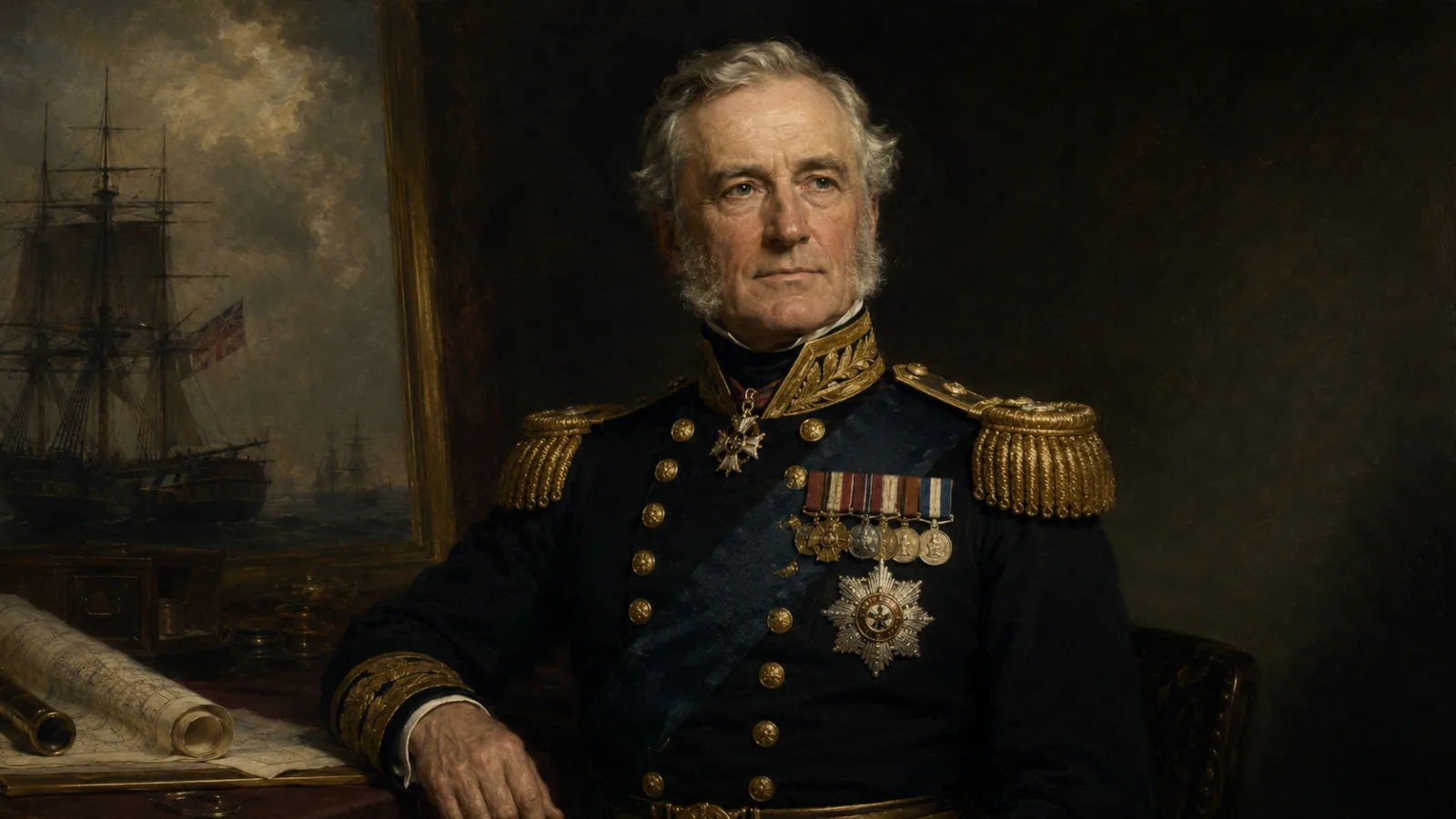
Sir John Franklin was 59 years old when he was given command. He was a respected officer with two previous Arctic expeditions behind him—one of which had ended in near-starvation and cannibalism among his men, a fact the Admiralty knew and apparently did not consider disqualifying.
His ships, HMS Erebus and HMS Terror, were former warships reinforced for ice and outfitted with steam engines connected to locomotive propellers, a novelty for polar exploration at the time. They carried enough tinned and preserved food to last three years, along with libraries, hand organs, and officers who kept detailed journals. By the standards of the day, this was Britain's best attempt at solving a problem that had defeated explorers since Martin Frobisher.
Departure and Silence
The ships left England in May 1845 and were last seen by European whalers in Baffin Bay that July, waiting to cross into Lancaster Sound. After that, they simply disappeared.
Two winters passed without word, not unusual for Arctic voyages that could take years. But by 1848, concern turned to alarm. Pressed by Franklin's wife, Lady Jane Franklin, and by public pressure, the Admiralty began sending search expeditions. Over the next decade, more than thirty missions from Britain and the United States combed the Arctic for traces of the lost crews—the largest search and rescue operation of the nineteenth century, and one that mapped more of the Canadian Arctic than the original expedition ever would have.
The Beechey Island Graves
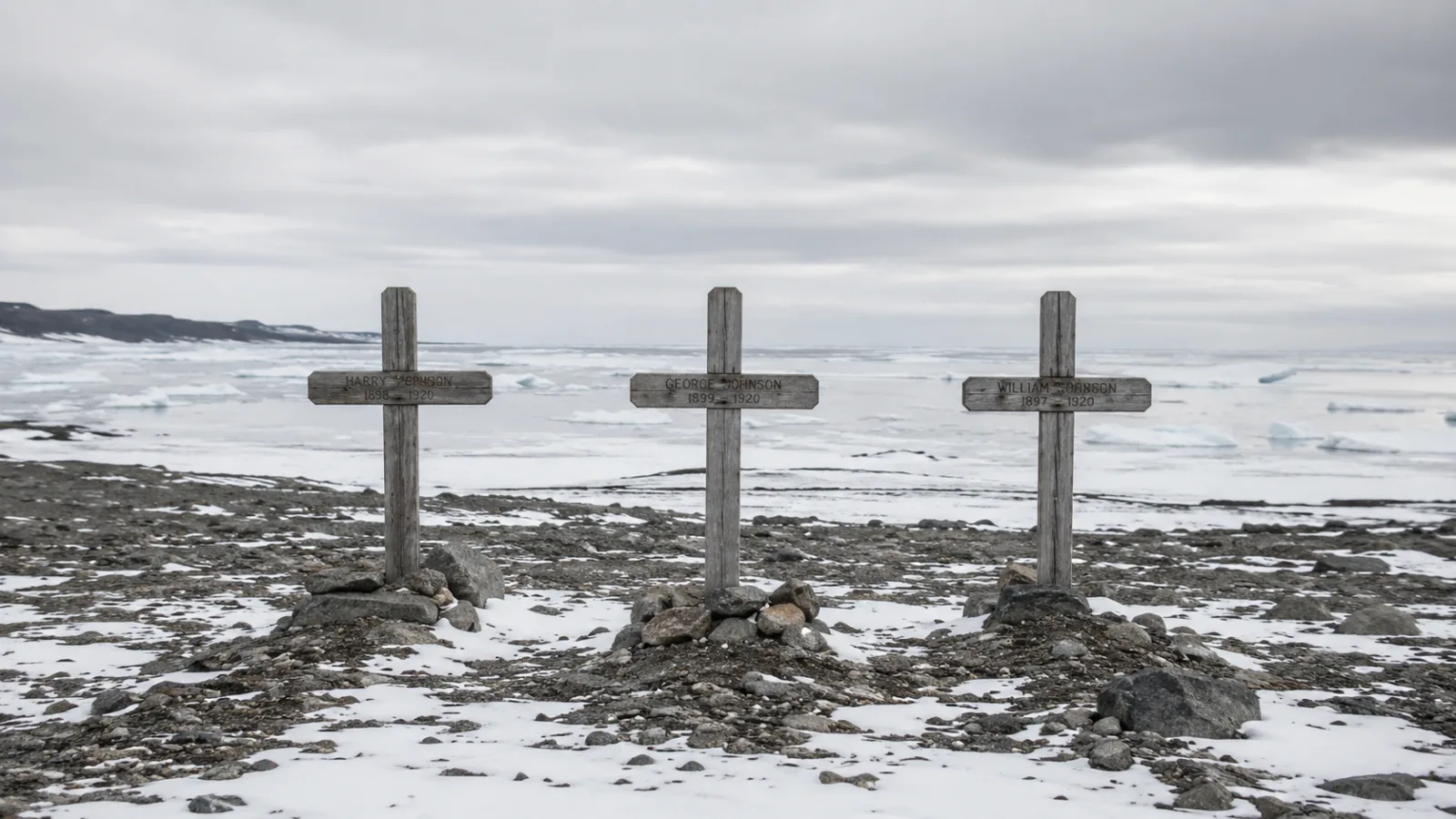
The first hard evidence came in 1850. Search parties found graves on Beechey Island, where the expedition had wintered in 1845 and 1846. Three sailors—John Torrington, John Hartnell, and William Braine—had died there and been buried with formal headstones. Their deaths, before the expedition had even truly begun its search for the passage, were an early sign that something aboard those ships was already wrong.
The Victory Point Note
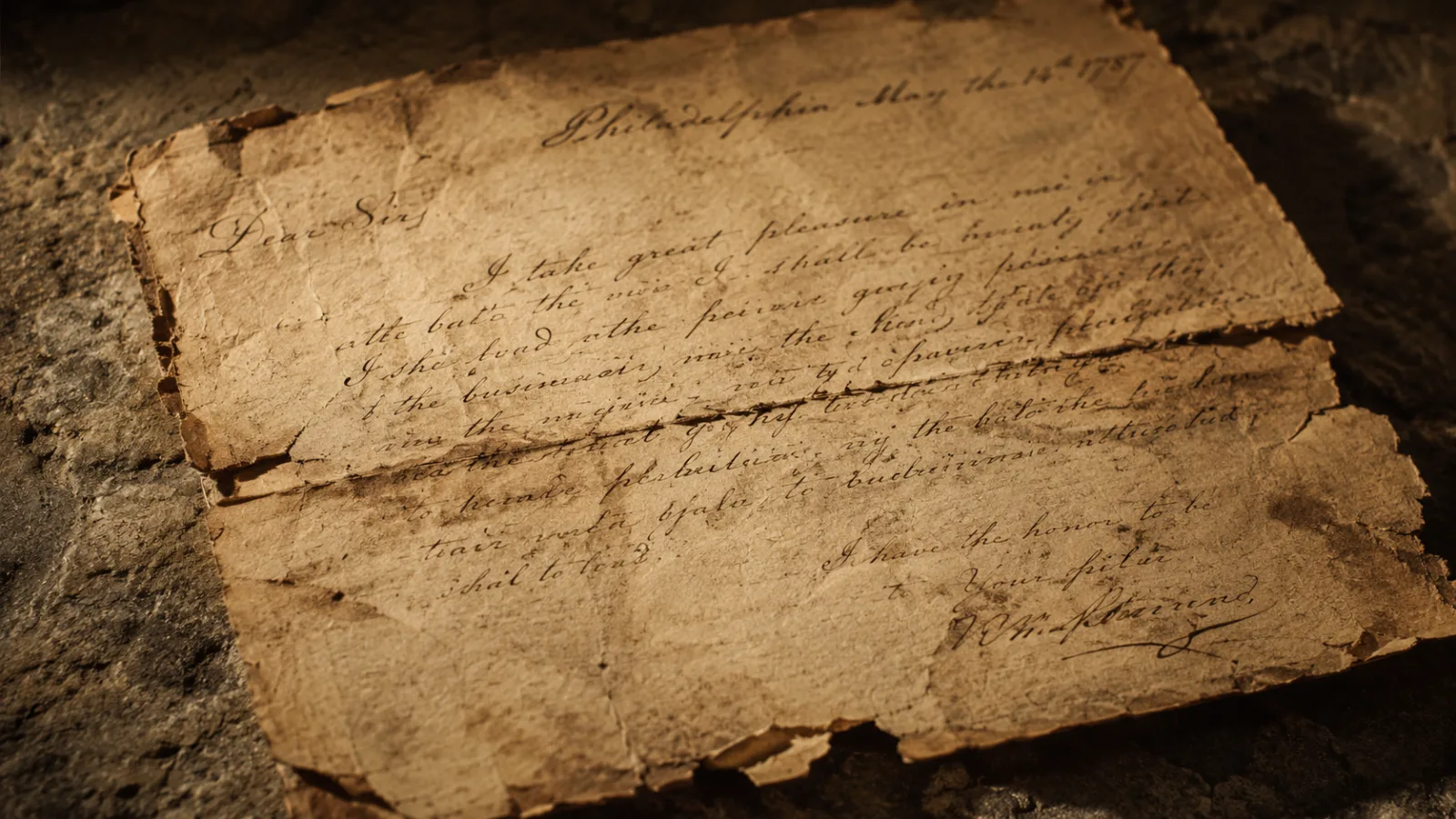
The most important discovery came in 1859, when explorer Francis Leopold McClintock's search party found a single written record on King William Island, tucked into a cairn. Known as the Victory Point Note, it remains the only substantial written account of the expedition's fate ever recovered.
The note was written on a standard Admiralty form, filled in twice, a year apart, by two different hands. The first entry, dated May 1847, was almost routine: it reported the ships wintering near King William Island with Franklin named as commanding officer, and the words "all well."
The second entry, squeezed into the margins and dated April 1848, told a different story. Franklin was dead, as of June 11, 1847. Nine officers and fifteen men had also died. The ships had been abandoned in the ice, and the surviving 105 men were marching south toward the Back River, hoping to reach mainland Canada and eventually find help.
They never made it. Searchers later found a lifeboat containing two skeletons and a bewildering assortment of items—silver cutlery, a chronometer, books—but curiously little food. Inuit oral testimony gathered by explorer Charles Francis Hall and others in the 1860s described encounters with a group of starving white men dragging a boat, and later, the discovery of bodies showing signs of what the Inuit described plainly as cannibalism. Victorian society largely refused to believe these accounts, unwilling to accept that British naval officers had eaten their own dead.

Forensic Confirmation of Cannibalism
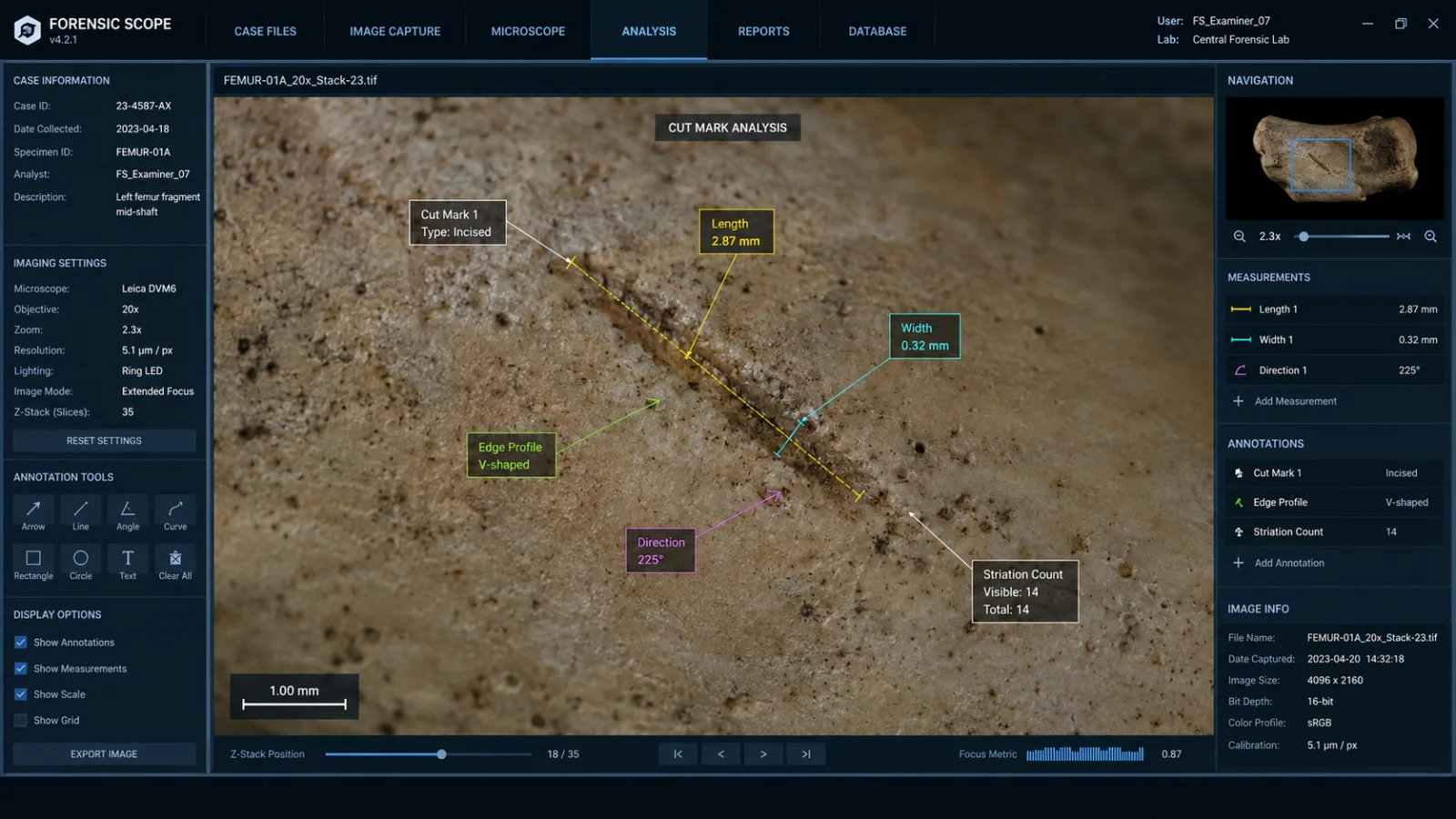
Modern science has since confirmed it. Analysis of human bones recovered from King William Island in the 1990s and 2000s revealed cut marks consistent with defleshing—the kind of marks left when someone strips meat from bone with a knife. This was not proof of murder, but evidence of desperation, of men trying to survive long after any real hope of rescue had passed.
Why Did the Expedition Fail?
The broad outline of the tragedy has long been known: the ships got trapped in ice, Franklin died, the survivors abandoned the vessels and tried to walk to safety, and virtually all of them perished along the way. The deeper question—why a well-supplied, well-led expedition fell apart so completely—has occupied historians and scientists for over a century. Evidence suggests it wasn't one cause, but a convergence of several.
Ice and Climate
Tree-ring and ice-core data show the mid-1840s fell during a period of unusually severe Arctic conditions. The ships became icebound near King William Island in September 1846 and never broke free. Modern oceanographers studying the region's currents note that ice there behaves unpredictably, sometimes trapping ships for years. This was, in a sense, bad luck compounded by geography.
Contaminated Food Supplies
The ships carried over 8,000 tins of preserved food supplied by a contractor named Stephan Goldner, who won the contract on short notice and rushed the order. Examination of surviving tins in the twentieth century found some had been sealed carelessly, with solder seams that could have allowed contamination. Some historians and scientists have proposed that spoiled or poorly canned food contributed to illness among the crew, though this remains debated rather than proven.
Lead Poisoning
Some tins were sealed with lead solder, and elevated lead levels have been found in bones and preserved remains from Franklin crew members, including those buried on Beechey Island. For years, lead poisoning was presented as a leading explanation for cognitive decline and health failure among the crew. More recent research complicates this: lead levels in 1840s Britain were high across the general population, from pewter dishware to water pipes. Scientists remain divided on how much the tinned food specifically worsened an already elevated baseline, and how much lead exposure actually impaired the men's judgment or physical condition during the expedition.
Disease and Malnutrition
Scurvy, tuberculosis, and other diseases were likely made worse by cold, exhaustion, and inadequate nutrition over long, dark Arctic winters. Analysis of the Beechey Island bodies found signs consistent with tuberculosis and possibly other chronic conditions. Malnutrition would have weakened the men's immune systems long before starvation became the direct cause of death for those who marched south.
The Decisions We Can't Reconstruct
After abandoning the ships, Franklin's crew chose to march overland toward the Back River rather than retreat the way they'd come, or wait longer for rescue. Whether this was a reasoned decision based on the best available information, or a desperate gamble born of dwindling options, is something the written record simply doesn't tell us. The Victory Point Note gives dates and names, but almost nothing about why the officers chose the path they did.
Finding Erebus and Terror
The most dramatic developments in this story came remarkably recently. In 2014, a Canadian search team, guided in part by Inuit oral tradition that had described the wreck's location for generations, found HMS Erebus in Queen Maud Gulf. Two years later, in 2016, HMS Terror was found as well, in a bay whose name had been suggested by Inuit testimony collected decades earlier and largely dismissed at the time.
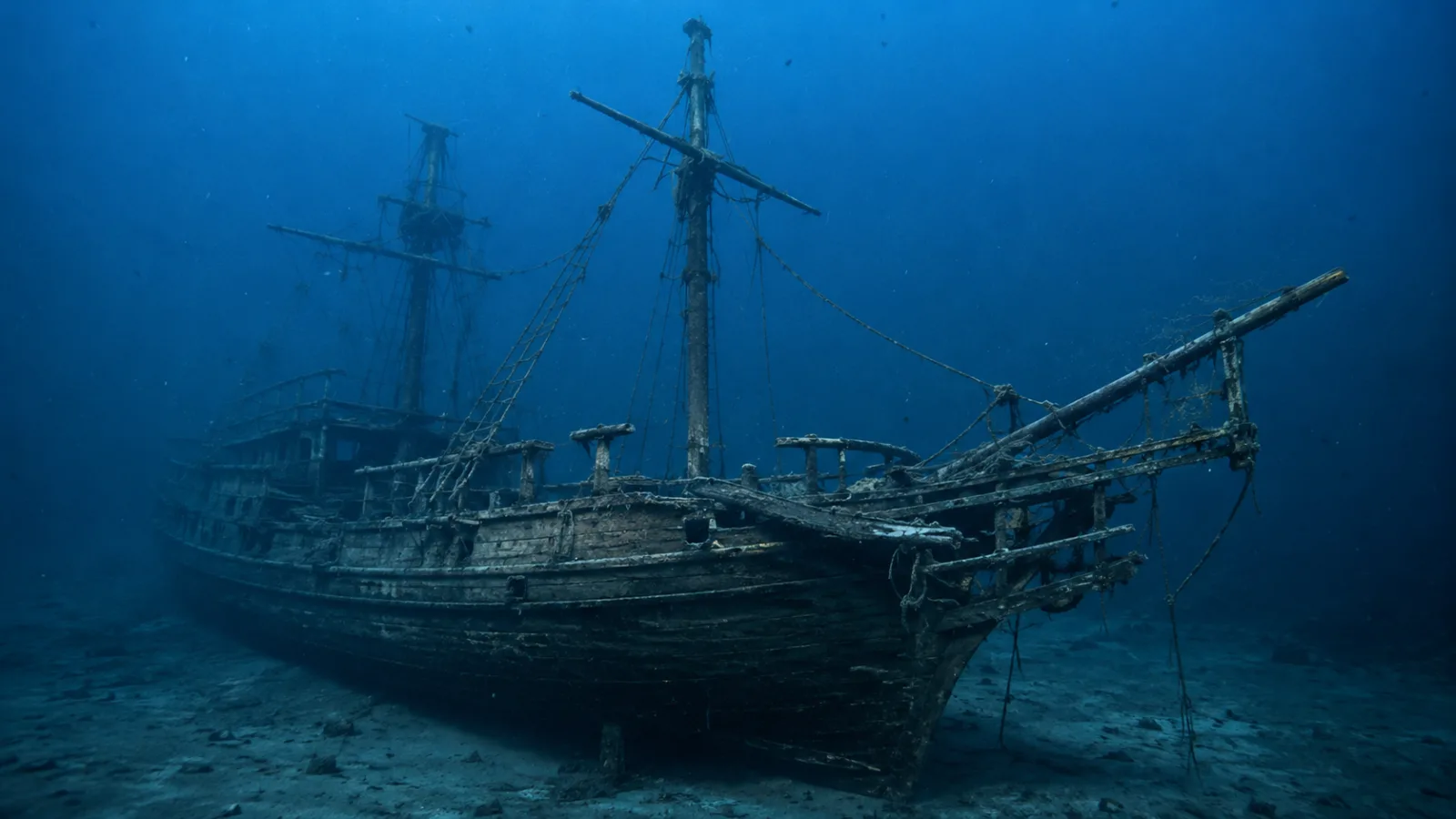
Both wrecks were found in far better condition than expected, sitting upright on the seafloor with timbers intact and personal items still in place. Divers have recovered plates and boots, and the captain's cabin at Terror was found remarkably preserved, with drawers still closed and shelves still holding their contents. It was an extraordinary discovery, one that vindicated Inuit knowledge that had been ignored by European searchers for over a century.
And yet the wrecks have not delivered the final answer many hoped for. No captain's log has been recovered. No comprehensive written account of the expedition's final years has surfaced. The ships tell us how the crew lived, in fragments, but not, in any complete sense, how or why the expedition truly failed.
What We Know—and What We Don't
The story stands today somewhere between solved and unsolved. We know the ships got trapped in ice. We know men died, first slowly aboard the vessels, then rapidly during the retreat. We know cannibalism occurred among at least some of the survivors, confirmed by both Inuit testimony and forensic evidence on the bones. We know contamination, illness, and malnutrition all likely played some role.
What we don't know, and may never know, is the full sequence of decisions, misfortunes, and failures that turned a state-of-the-art expedition into a mass grave scattered across two hundred miles of Arctic tundra. We don't know exactly how each man died, in what order, or what was said in those final days as hope ran out. The Victory Point Note tells us the beginning of the end. It does not tell us the end itself.
The Arctic keeps its records differently than we do. Ice preserves, and cold slows decay, yet the full truth of the Franklin expedition has resisted recovery for over a century and a half—hidden not by malice or conspiracy, but by the sheer, indifferent vastness of the place where it happened. Two ships have been found, a note has been read, and bones have been studied with tools Franklin's contemporaries could not have imagined. And still, somewhere in that white, frozen expanse, the full story of 129 men remains exactly what it has always been: mostly unknown.