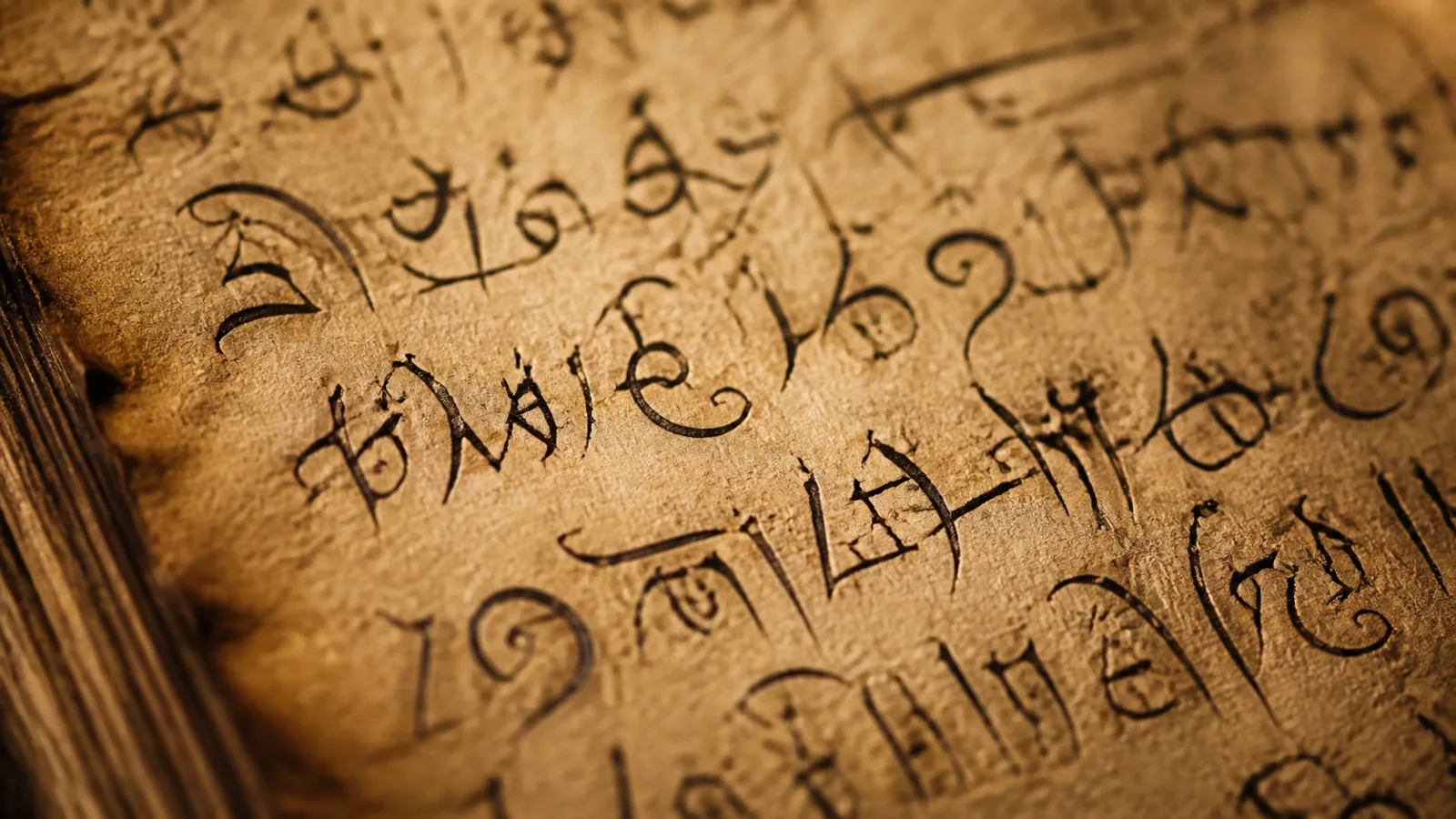
Somewhere in a climate-controlled vault at Yale University, behind glass and under lock, sits a book that has defeated every codebreaker who has ever opened it. Its pages are filled with flowing, elegant script — thousands of words in an alphabet that matches nothing else on Earth. Strange plants twist across the parchment, unlike any species known to botany. Naked women bathe in pools connected by a plumbing of green tubes. Circular diagrams show stars and skies in patterns no astronomer recognizes.
Nobody living can read a single word of it.
Codebreakers who cracked German military ciphers in the Second World War have tried and failed. Modern artificial intelligence has been turned loose on it and failed too. The question is not just what the book says. The question is whether it says anything at all. This is the story of the Voynich Manuscript.
A Rare Book Dealer's Discovery
The manuscript takes its name from Wilfrid Voynich, a Polish-American rare book dealer who purchased it in 1912 from a Jesuit college in Frascati, Italy. Voynich was already a colorful figure — a former revolutionary who had been imprisoned in Siberia before escaping and reinventing himself as one of the era's most respected antiquarian booksellers.
When he acquired a collection of old manuscripts from the Villa Mondragone, one item stood apart from the rest. Voynich recognized immediately that he was holding something unlike anything he had handled before, and he spent the rest of his life trying to prove it was significant.

A Letter to an Emperor
But the manuscript's history did not begin with Voynich. Tucked inside the book was a letter, dated 1665, written by a Prague scholar named Johannes Marcus Marci to the Jesuit priest and polymath Athanasius Kircher. The letter claimed the book had once belonged to Rudolf II, Holy Roman Emperor, who reportedly paid a substantial sum for it in the belief that it was the work of the medieval English friar Roger Bacon.
Rudolf was known for his obsessive collecting of curiosities, alchemical texts, and anything touched by the promise of hidden knowledge. If the letter is accurate, the manuscript had already been circulating among Europe's intellectual elite for decades before it vanished into obscurity for over two centuries.
That is where documented history runs out and speculation begins. Between the 1600s and Voynich's purchase in 1912, the book's whereabouts are essentially unknown. It may have sat in the Jesuit archives the entire time, or it may have passed through other hands first. The gap is real, and nobody has closed it.

What Carbon Dating Actually Proved
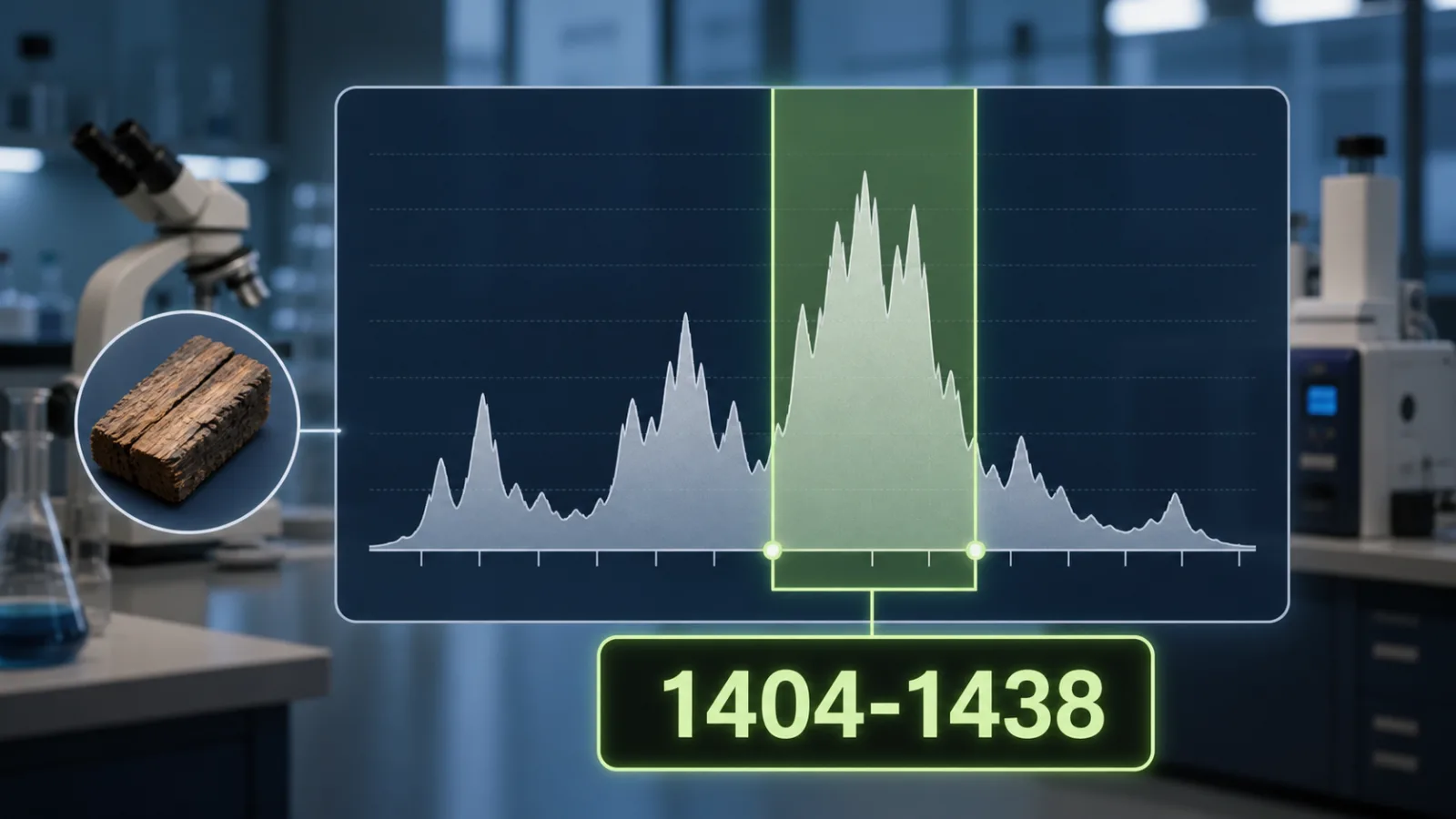
What we do know, thanks to modern science, is when the physical object was made. In 2009, researchers at the University of Arizona carbon-dated four samples of the vellum — the calfskin pages themselves — and found they dated to between 1404 and 1438, placing the manuscript firmly in the early fifteenth century.
This was a genuine breakthrough. It ruled out theories that the book was a later Renaissance forgery, and it ruled out Roger Bacon, who had died over a century before the vellum was even made. Analysis of the ink further supports the idea that the text was written not long after the pages were prepared, meaning this is very likely an authentic medieval document, not a fake assembled from old paper generations later.
So we know roughly when it was made. We still do not know who made it, where, or why.
Inside the Strange Pages
The physical structure of the book is as strange as its contents. The manuscript runs to about 240 surviving pages, written in a flowing, fluent script that researchers call Voynichese. The handwriting shows none of the hesitation you'd expect from someone laboriously copying an unfamiliar alphabet. It reads like natural, practiced writing — whoever set this to parchment did so with fluency and speed.
The book is divided into sections that scholars have labeled by their apparent subject matter:
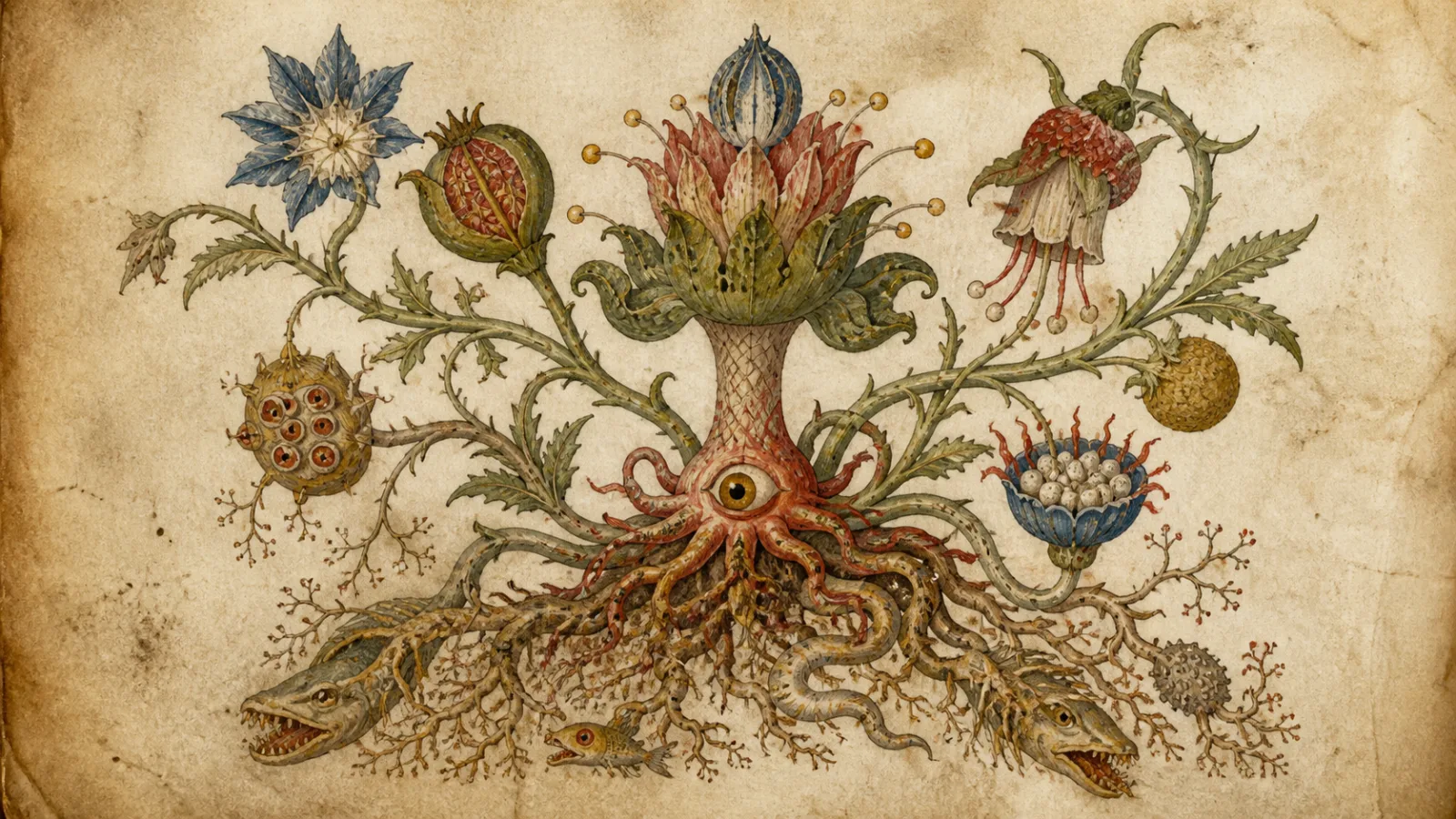
- A botanical section, filled with careful drawings of roots, leaves, and flowers. The vast majority correspond to no known species. A few resemble real plants loosely, but botanists who have studied the illustrations say most appear to be composites or inventions, mixing features that don't occur together in nature.
- An astronomical or astrological section, with circular diagrams resembling star charts and zodiac symbols, though the symbols and groupings don't match any known medieval system precisely.
- A balneological section, full of small nude female figures bathing in green pools, connected by an elaborate network of pipes and tubes some have compared to human anatomy or plumbing systems, though no one agrees on what it depicts.
- A pharmaceutical section showing labeled jars and plant parts, suggesting recipes or preparations.
- A final section of dense, uninterrupted text with small star-shaped markers in the margins, which some believe may be a kind of index or key — though that too is speculation.
Voynichese: A Language That Shouldn't Exist
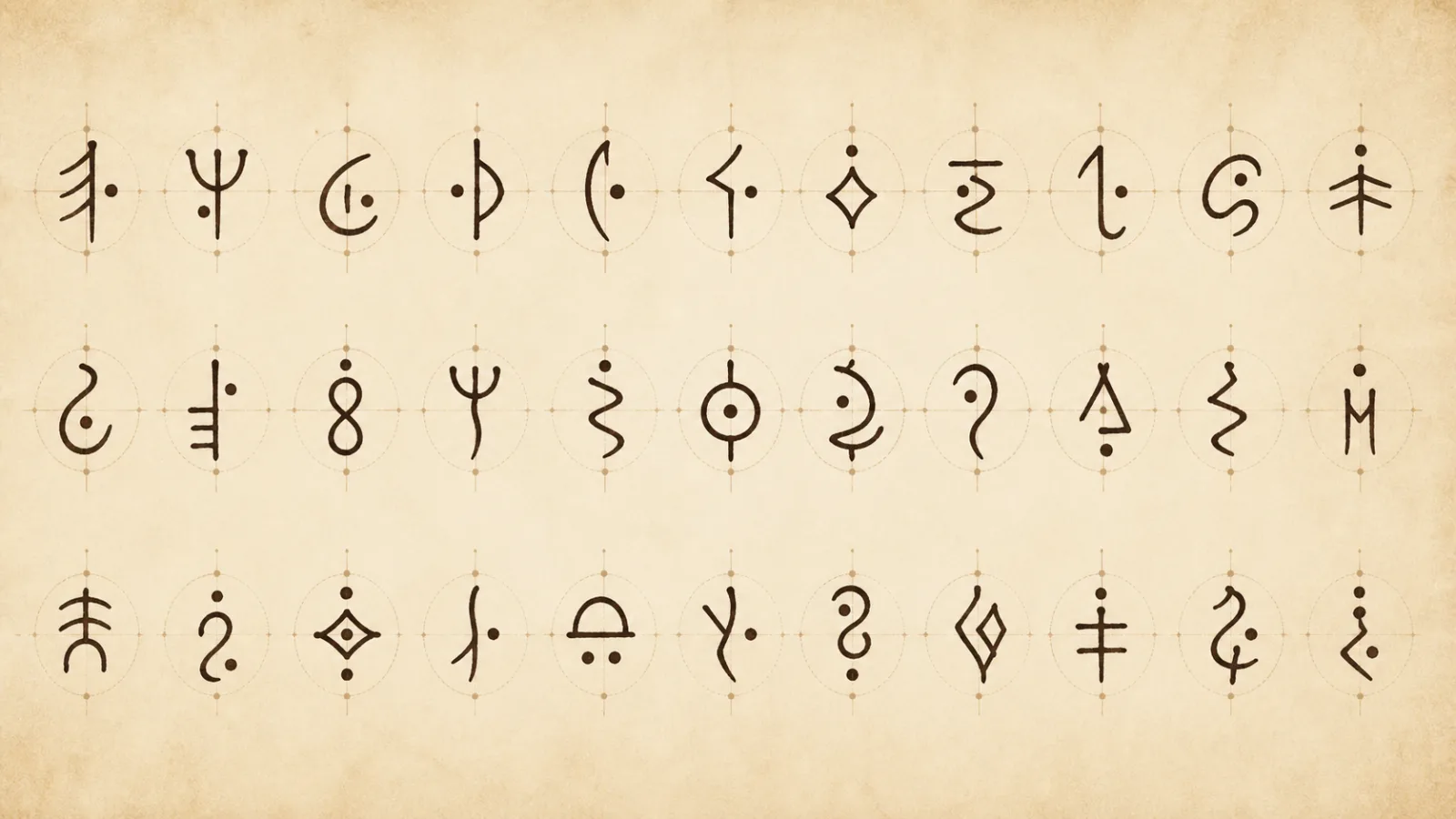
At the heart of the puzzle is the writing itself. Voynichese consists of somewhere between twenty and thirty distinct characters, depending on how you count variants, used with startling internal consistency.
Statistical analysis shows the text follows recognizable patterns found in real languages — word lengths, letter frequencies, and repetition rates that resemble natural speech rather than pure gibberish. Certain characters appear almost exclusively at the start of words. Certain patterns repeat with a regularity you'd expect from grammar, not randomness. This is precisely why it has resisted every attempt at translation. It behaves too much like language to dismiss, and too strangely to match any known one.
The Codebreakers Who Failed
Since Voynich brought the manuscript to public attention, an extraordinary range of people have tried to crack it. William Friedman, one of the most accomplished cryptanalysts in American history — a man who helped break Japanese military codes in World War Two — spent decades of his career studying the Voynich text, and never solved it. He came to suspect it might be some form of constructed language, an artificial system built from scratch rather than a cipher hiding a real one.
Other researchers have proposed it's an elaborate substitution cipher for a known European language, though every specific proposed solution has collapsed under scrutiny, failing to produce consistent, meaningful translations across the whole text. Some have suggested it encodes an early Slavic or Near Eastern language written in an invented alphabet.
In 2019, a researcher claimed to have identified it as a form of abbreviated medieval Latin. The claim received wide media attention and was swiftly and thoroughly rejected by Voynich scholars, who found the method arbitrary and unable to produce coherent translations. Modern computational linguists have since run machine learning models against the text, hoping pattern recognition might succeed where human eyes failed. So far, none of these efforts has produced a translation that other experts accept as valid.
Is It All an Elaborate Hoax?
This brings us to the theory that unsettles the entire field: what if there's nothing to decode?
Some researchers argue the manuscript could be an elaborate hoax — a meaningless string of invented characters designed to look like a language, created either to deceive a wealthy buyer like Rudolf II, or as some kind of intellectual game or forgery for profit. Statistical studies have shown that certain gibberish-generation methods used in the medieval period, involving grids and tables of syllables, can actually produce text with some of the same statistical properties found in Voynichese. That means the